
As the first part of this blog series focused more on the deep uncertainty I faced, problems with getting an accurate diagnosis, and the hurdles around the kinds of feelings that situation generated – I wanted to focus more on how one can evaluate treatment and solutions in Part 2.
A large question people with facial pain have it: “What is the true cause of my pain”, and depending on who you see you’ll get a variety of answers. I’m not going to lie, ChatGPT gave me a better answer and explanation than quite a few people I sought out. Is the true cause some strange sounding TCM diagnosis like Wind in the channels, or could it be something else, or a combination? The lens from which we look at a problem can easily influence our diagnosis and treatment.
If you see a dentist, you’ll usually get a dental solution. If you see a PT, you’ll hear about exercises you can do. If you see an acupuncturist, it’ll be points on the body. If it’s a herbalist, you’ll leave with a bag of herbs. If you’re seeing a chiropractor, you’ll get adjustments. If you see a western style professional, you might get a prescription or two, or perhaps an injection, or maybe even a surgery.
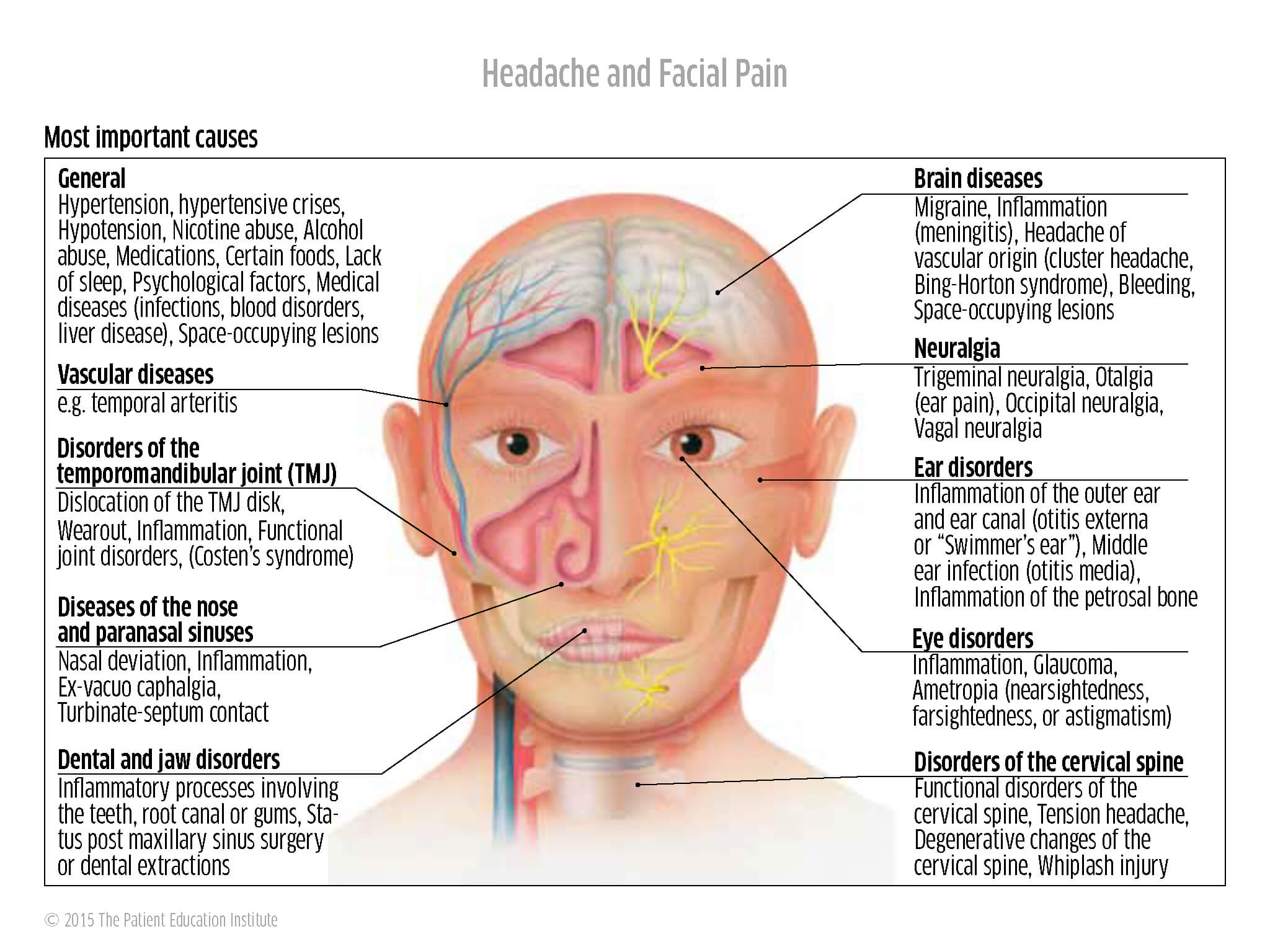
How do we decide what to try, in what order, and for how long, to see if a treatment is working? Who do we believe, and what do we believe? These are questions I continually review to this day. As you can see above, there are a variety of causes of facial pain, and we sometimes need an expert who is aware of and versed in most of them to be able to do what’s called a differential diagnosis. From there, you can start seeing the correct provider, and start moving towards a practical solution. The provider has to know all the things it could be to be able to tell you which ones it is not, thus getting closer to the answer. And in some cases, it’s idiopathic, meaning no one currently knows why.
It’s really difficult to do this in a system where it takes months to see a specialist, when the cost of care can be so high, and when we are living in day to day pain. It’s also difficult when you are seeing providers who don’t know how to refer out, admit they don’t know something, or give you honest answers. Likewise, it may not be that they are lying, but instead they have a profit motive to keep you trying their service. I believe we can figure out if this is happening by taking notes, journaling, and tracking not only our symptoms but our intuitions about what is happening.
Sometimes, it feels like we’d do anything to make it stop or go away. I’ve been there. And trust me, this can be a dangerous place where it is easy to be taken advantage of. At one point I saw a dentist who said they didn’t think I had Trigeminal Neuralgia, but instead TMJ, and sold me a $1,400 dental appliance to resolve my problem. I believed her, and tried it out faithfully, but it ultimately made my problem worse. I wasn’t in the right state of mind to critically evaluate the proposed solutions I was receiving. But how do you get there?
My formula is this: keep my internal practices of Qigong going, so my senses are sharp, take good notes, do research, ask friends and family for help, and join a support group for the condition you’re having. If you do all of those things, you will eventually find more answers.
As discussed at the end of Part 1, I ended up receiving an MRI that showed a large mass pressing on my brain stem and my cranial nerves. The mass was an intracranial epidermoid cyst. Epidermoid cysts are rare, congenital tumors caused by ectodermal cells (which normally become skin cells) being trapped within the developing brain during early embryonic development. Epidermoid cysts account for less than 1% of all brain tumors, so they are extremely rare, on top of another extremely rare diagnosis, Trigeminal Neuralgia. It’s no wonder it took people a long time to figure out – guess I’m special.
The only solution was surgery in my case – and a major one. The cyst was bumping up against a ton of cranial nerves who truly dislike being stretched and encased. On Jan 17, 2025 I saw one of the best surgeons in the US to have my cyst resected – Dr. Laligam Sekhar, or as I’ve come to know, “the neurosurgeon’s neurosurgeon.” He was able to get 99% of the cyst removed, and I woke up without facial pain. However, I also woke up with complete hearing loss in one ear, CN6 palsy (meaning the left eye could not abduct past the midline), and months and months of recovery ahead of me.
Even when we find the answer, and give the solution the best try, we still might have side effects, prolonged recovery, and mental/emotional states to work with for quite a while. That is a place where acupuncture can really assist. I hooked up with a neurologically focused acupuncturist and got my vision improving within a few months, and I even let him use my case as a study to help his students learn. It felt so nice to see someone who understood what my surgery was about, was educated in neuroscience, and truly felt like they could help, yet be honest about their limitations.
And where was community acupuncture during all of this? I am lucky to have an acupuncturist partner — her help, and the help of my family, was critical to my overall recovery. It truly takes a team. This experience formed the basis of creating Fire Rabbit Community Acupuncture, the desire to share with people an honest assessment of what acupuncture can and can not do, and to make it available for people to try acupuncture for their conditions on their own terms.
In upcoming blogs, we will speak more about how acupuncture can help with facial pain, and in particular TMJ. Look forward to engaging with you soon, and thanks for reading my story.